Magic in Gualala, CA

California Art Club put together a “Paint Out” in Gualala, California this last month. I participated and really enjoyed it. There were about thirty-eight artists from all over California. For an artist, it is always fun to be around other artists. Two or three artists can be painting the same scene and they will all look entirely different.

The only downside was that I stayed in an old-world waterfront hotel. The room had a wonderful view, but It took at least ten minutes to get water warm enough to shower. The breakfast was either a stale wrapped Biscotti or a muffin of the same nature. I passed on both. There was no room service, so no clean towels, and I was there for six nights.

The beaches were clean and beautiful. The first day I painted at the park, with an expansive view.

I loved the view for viewing, but not particularly for painting. I’m not sure if that makes sense. I attempted to capture the beauty; but I felt something was missing for a painting. My opinion has not changed. Maybe it’s just too much information?

The next day, I visited a beautiful estate named “Barking Rocks.” It was named for all the seals that live on the rocks. There were about twenty of us painting around the waterfront property. I chose to paint a small and quick painting of the rocks.
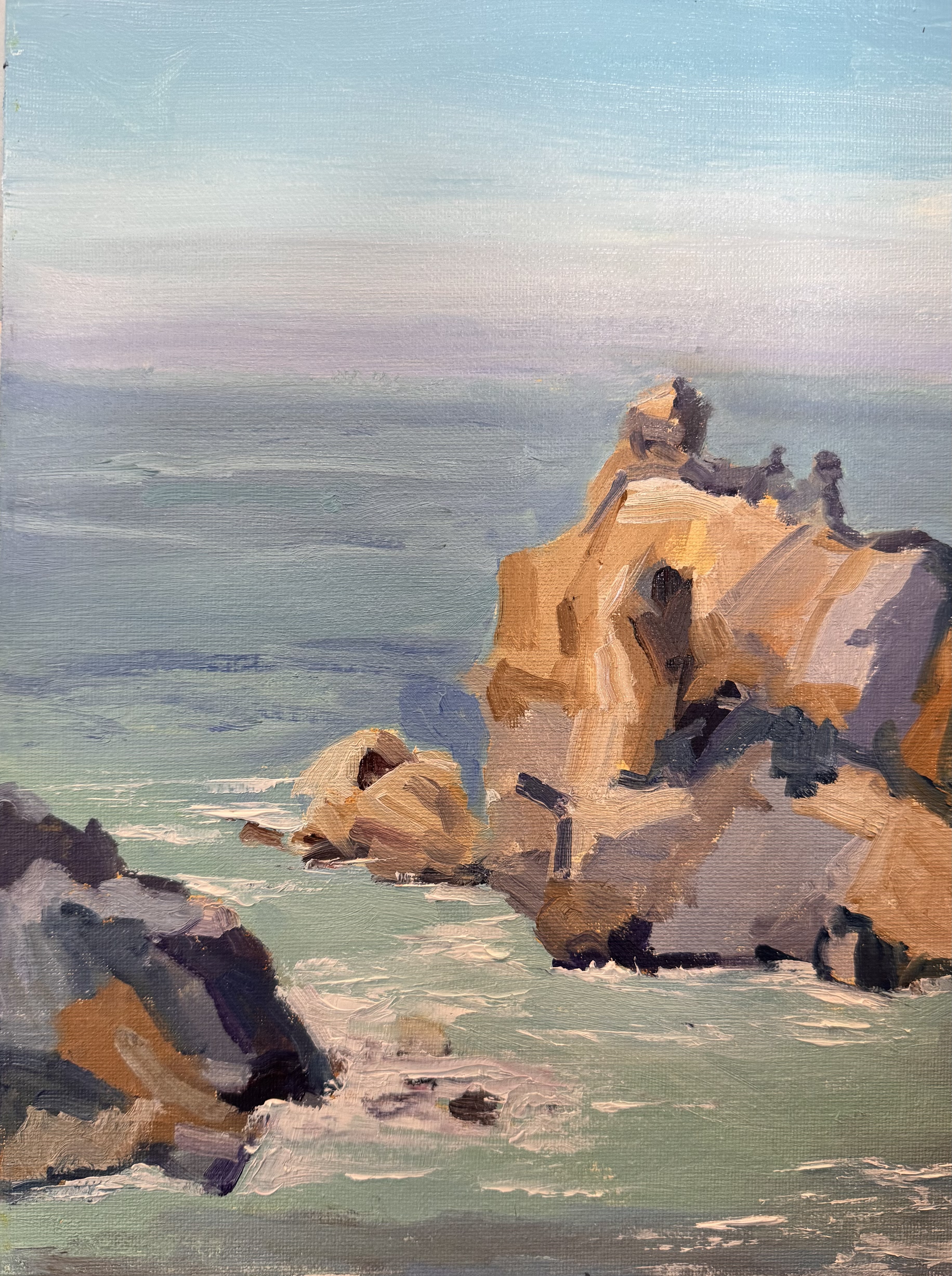
I was happy with this 8 x 10 and entered it the last day to be critiqued. No one found fault with it, so that was quite nice.

The third day I drove to Cooks Beach, where several of the group were painting. I joined on the cliff above the beach. Several others took the trail down to the beach and were painting on the beach.

I painted this on a 9 x 12 panel. I liked it when working on it.

The next day was too foggy to paint. I reworked the rocks in my hotel room. Gualala is a beautiful place, but does have fog that rolls in and you can not even see the beach. I drove south to Sea Ranch first and the further I drove, the thicker the fog. I chose not to stop at places where you had to hike quite a ways to the beach. I was by myself and did not want to run into “critters”.

I turned around and drove north toward the Pt. Arena lighthouse. When I got the road that takes you to the lighthouse the fog was fairly thick. I drove out to the lighthouse, but the fog was so thick I hardly saw it. I did not paint the foggy wonder, but it is one of the tallest lighthouses on the West Coast.

The effort to find a place to paint did not work well. I painted in my hotel room that day. The final day of the Paint Out, one piece of our work was critiqued by two well-known artists. It was fun to see what other people had painted. I would have loved to have seen the other pieces they had painted, not just the one. After the critique, it was time to head home.

I met many fun people and hope to do more with the California Art Club in the future. Here is the photo from our lovely cocktail party at Barking Rocks on Thursday night in their gallery. It was my second paint out. There were no awards, so it felt more casual than others.

Magic in Gualala, CA

How to Choose Your Next Painting Inspiration

If you are not out doing a Plein Air painting, how do you decide what to paint next? I keep file drawers with lots of ideas. I collect work from other artists for inspiration. I add anything that looks good to me from an ad or magazine at the moment. I look for great photos on Facebook and ask permission to use. When I travel I take lots of photos that “might” make good paintings.

Read my blog. You will see I just did a series of pen & ink drawings of Vacaville, California, where I currently live. I completed a few more drawings for the series I did for Winters, California. This was relaxation time in the evening, as I could watch a movie, draw and use watercolor in my home.

I did a series of animals for fundraiser for a local animal shelter named Funky Chicken. My pieces are selling very quickly as they are posted on “Shine A Light – on those that Inspire“. Each day a different artist’s work of animals from the shelter is put on Facebook for sale.

Right now I am working on a fun piece. It’s from a photo my daughter-in-law took. The photo features her two daughters and niece. They are at the beach in almost matching purple swimsuits. I wanted you to see them, not the water. Hope you like it.

So, now that this is done, what is next?

Many artists stay with one theme. They paint landscapes or portraits. They paint only still lives or fruit. I get “bored” with always painting the same theme, so like to try different things. Maybe I will paint flowers next?

If you are an artist, how do you decide what you want to paint?

Check out my website at: http://www.dianabennett.net

Check out my Instagram at: https://www.instagram.com/diana.bennett.artist/

Send a note to: dianabennett.artist@gmail.com

Add your name to mailing list to receive my latest blog.

How to Choose Your Next Painting Inspiration

Downtown Winters Sketches

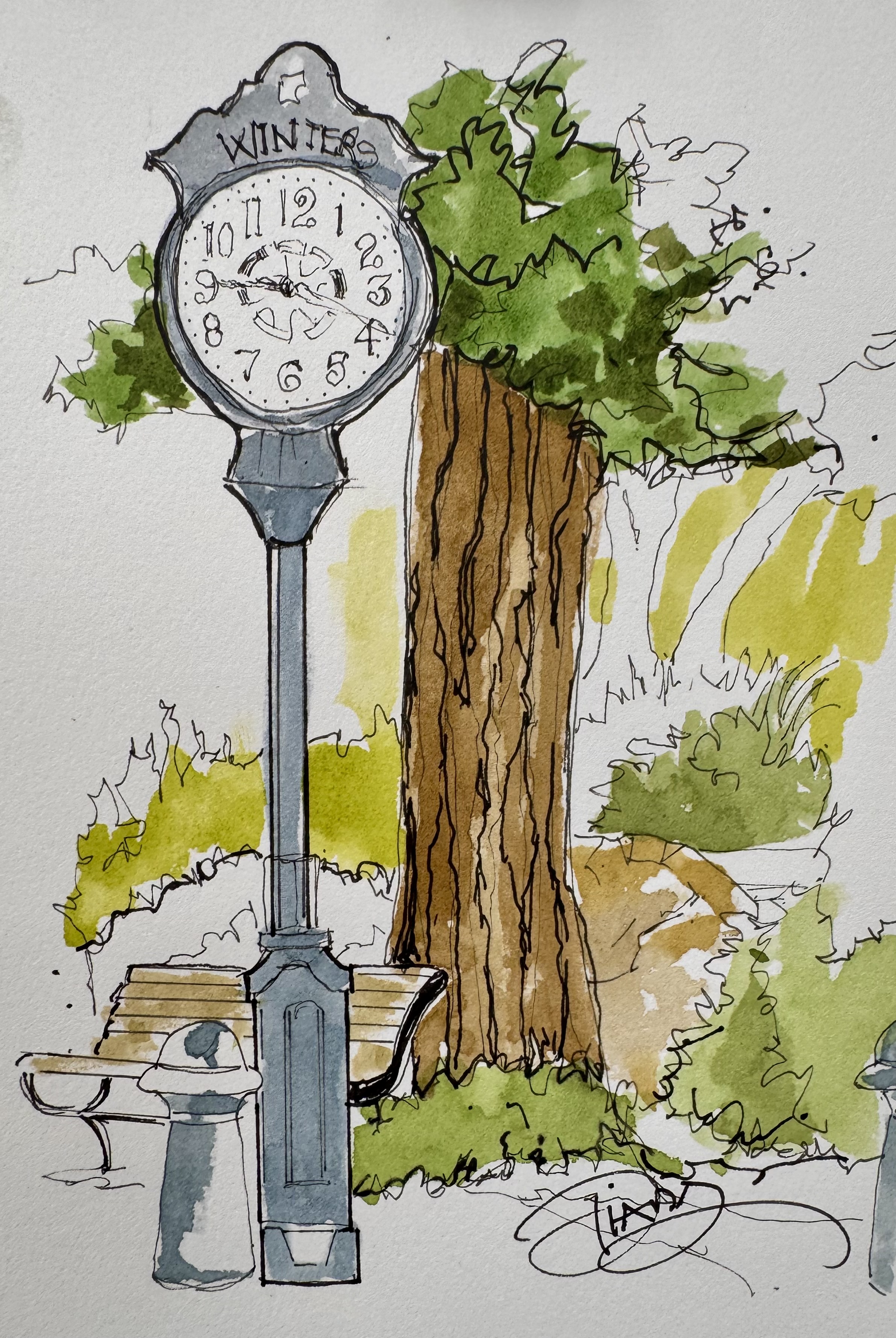
I started this series for a friend of mine that was active in the Winters Chamber of Commerce. They were in a small section of a downtown store. People seemed to like them. They served as a nice memory of drinking wine, eating yummy food, or just spending time in Winters. I recently expanded the drawings to include a few new spots of interest. You can buy them at Yolo 365 Artisan Market in Winters or from me direct in Vacaville. Each card is $6.50.

I taught Hand Drafting (and many other interior design classes) at the Art Institute of Seattle for several years. This experience translated nicely into this type of architectural drawing. My book “Hand Drafting for Interior Design” is in it’s third edition and available on Amazon. It is still used (believe it or not) in colleges around the world. Let me know if you think there is something or somewhere else I should add to this collection. Most of the originals have already been sold. The clock, The Preserve and Yolo 365 are available at Yolo 365 Artisan Market in Winters.

Downtown Winters Sketches

Sketches of Downtown Vacaville

A few years ago a friend of mine asked me to do a series of drawings of Winters, California. They were sold at the Winters Chamber of Commerce. People enjoyed purchasing a card to remember having a glass of wine or maybe a meal they enjoyed.

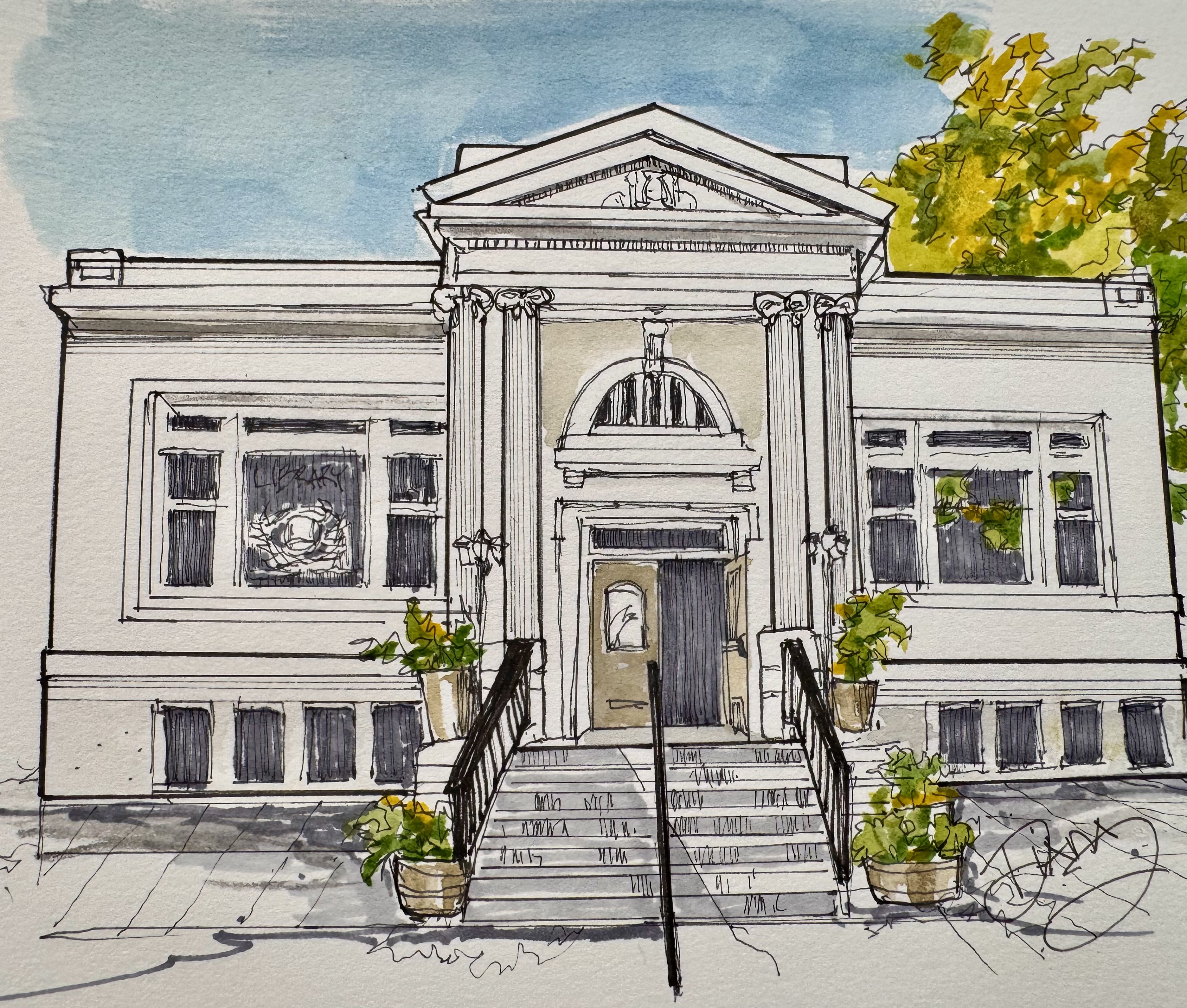
Now living in Vacaville, I thought it would be fun to do a series of drawings of the local downtown. See if you can name them all. They are for sale at “The Artisan in Vacaville” or from me directly. They sell for $6.50 per card. If I am low of your particular card I can order more.

When I first moved to Vacaville, I created a series of drawings featuring some of the beautiful old homes on Buck Avenue. Cards can be made of the ones I drew, or if you would like one of your home, contact me.

I will do a blog with my drawings of Winters, California. I started doing these drawings during the Pandemic, when we no longer went out much. I enjoyed drawing and did not yet have a studio or my oil painting supplies here in California. I took photos of many of the houses I wanted to paint. In the evening, I would work on the drawings as I watched television and had a glass of wine. Since the idea of going out was not an option, this was a great way to pass time.

I hope you enjoy them, and maybe think about buying some!

Sketches of Downtown Vacaville

Funky Chicken

A friend of mine is organizing a fundraiser for “Funky Chicken”, a 501(c)3 non-profit animal sanctuary in Northern CA. They rescue animals in need. Recently the owner was injured. She asked me to be a guest artist; as they sell paintings to people that follow their Facebook page. You can see the artwork on the “Shine A Light – on those that care”. All the artwork is 8″ x 10″ and available for sale at Shine A Light. Please check out both pages on Facebook.

Here are my contributions:

These and many other animals have been rescued by Funky Chicken near Vacaville.

I don’t often volunteer this much art, but love animals and hope this helps the shelter. Please look at the two different pages. You can buy some fun art or make a donation to this wonderful animal shelter. The animals will all be happy for your help!

Funky Chicken

What Can You Learn in an Art Class

I have always felt if I learn one new thing from a painting class, then it was worth the money. I took one last weekend at Folsom college, which is about an hour away from where I currently live. Setting up my easel, I realized my tripod was broken. I leveled my pochade box and just set it up on the table. That being solved I looked around the classroom and learned my first new idea. The man setting up next to me had put masking tape where his canvas sat. I thought this was so clever. I often put my finished painting in a frame. I set it on the easel to see what the finished project looked like.

Within the first five minutes I had at least one “ah ha”, and will do that going forward. Once the class began as I watched the demo, I was happy to see that the artist used many of the things I have been taught in other classes. What I loved was that he broke many of the “rules” from classes and teachers in the past.

He blocked out the design of the painting using Alizarin Crimson. He then used a roller or a large brush to indicate simple areas. It was a much faster way to begin a painting. He went on to share that every painting needs a story. He often writes a poem about his painting. I love that Idea! It is something I have started adding to all my work.

The story/poem for this first painting:

Being on a bus ~ not my favorite.
Being on a tour bus going to a wine tasting ~ getting better.
Being on the same bus ~ passing beautiful hay fields.
Now, this is good! Hey! Let’s have a glass of wine.

My first painting was from a photograph I took out of a bus ride in Hungary to go to a wine tasting at a well-know winery in the area. It was a beautiful day, and we kept passing hay fields with rolled bales. Having grown up on a farm, where we raised wheat and barley I love being out in the country. We were asked to bring our own photographs. The first day was to be a landscape. He had photographs, but if we used his photographs we could not sell our piece. I painted from a photo on my phone. It was a small photograph to work from. I promised myself I would learn how to move my photos to my Amazon Fire when I had time.

I started the painting by placing the trees and the bales. It was a fairly quick study, which I completed in a couple of hours.

Our teacher made only two suggestions. One was to darken the base of the trees. The other was to add a little green to the sky. I did both and was pleased with the result. One thing I have learned about photographing your work, is that it always views better in person and in a frame.

The next day he was going to be doing a demo on an ocean scene. I had several photos from Puerto Vallarta. I selected one off my phone because I forgot to bring photos to use as a reference. When I got home I printed a couple of photographs to take the next day. You can enlarge the photos to see a certain part. However, having a larger photo as a reference is easier.

My husband and I travel to Puerto Vallarta every year. I always enjoy the beach as it is shallow and you walk out a ways. It is also quite beautiful. I selected this photo as my second to paint.

Bringing the painting to life and wanting to draw you into the scene, I changed the colors a little. I wanted the focus to be more in the middle, where the waves are crashing. I wanted you to know the mountains are there, but not the place your eyes goes first. There were a couple of areas that drew attention to the wrong place. The instructor helped me decide what to simplify.

As I worked on this our instructor said: “When you think it’s done it’s already over-worked.” He came and said: “Leave it where it is, so you don’t lose the spontaneity of it.”

Poem/Story:
Does being at the sea bring you joy? Does it bring peace?Does it make you calm? What does? Does anything?

For my last painting of the class, I had about two hours remaining. I zeroed in on part of this photo. This allowed me to do a simple and fast painting. I finished the following painting in about twenty minutes. One of my good artist friends once pointed out: “When someone asks you how long it took to paint this piece, respond with how many years you have been studying. This indicates the effort you’ve put in to reach this point.” I have been painting about thirty years (off and on), so it really took more than twenty minutes to complete the painting.

This class was very successful for me, as I learned several new ideas. I will add them to the way I paint.

Poem/Story:

Let’s walk to the beach. I just walked down to the beach. The Light danced on the water. The surf sang songs of joy. And I knew the day was mine.

Enjoy your next class. Don’t expect to totally change the way you paint or think. Concentrate on learning something new and add it to what you already know and use. One new idea is better than none! I learned many other things in this class that I did not share, but totally enjoyed.

What Can You Learn in an Art Class

Traveling Art

When I travel I always take something along to sketch and paint with. We recently returned from a Viking River Cruise. For some reason I had expected to see wonderful sights all along the river. That just was not true. There were a lot of trees and many concrete levies along the way.

I found we spent many hours on buses taking us to locations away from the river. We started our cruise by staying in a lovely hotel in Bucharest for three days. The river was too low for the riverboats to pass. We wanted to see the Black Sea at Constanta. So, we took a seven hour bus ride to see the sea. It was lovely, but not a seven hour bus ride lovely?

The small painting above was from a photo I took from our first night on the Danube. We were on a boat with 194 people. There weren’t many “quiet places,” so it was difficult to find somewhere to sketch. I found a table in an area that served as a dining area most of the day. It was not particularly private.

As we continued our journey, I looked for fun things to sketch. This priest was sitting outside of a cathedral that we walked by in Constanta, Romania. I’m not sure of his purpose and it was quite hot, but I thought it was an interesting sketch.

Here is the photo that I took. I was using watercolor, which is unforgiving. I wanted to make his eyes closed as in the photo, but I accidentally made him look awake. It is not something I will turn into a painting, but it was a fun sketch.

Going through the locks for the first time I found this group of workers rather humorous. They were supposed to be working, but here they are chatting and on their cell phones.

I took some other photos on the trip that I plan to paint:

I’d love to know what you think would make a good painting. It was a fun trip, but it is always good to be home.

Traveling Art

Reflections on a Pond

Kevin McPherson painted the pond out his back window, everyday for a year. I tried to paint the scene from my home on the beach everyday, but gave up after about six weeks. I tried taking photos and painting from the photos so I would have a painting from every day. I realized quickly that this was quite the undertaking.

I was lucky to live on the waterfront for fifteen years and every day was a miracle to view. I often painted the different views from my home, but 365 days in a row was just too much. Even though Kevin McPherson’s paintings were only six by eight, he did one every day for a year.

As you can see it was an amazing place to live, especially if you are an artist. I miss it every day. But, I don’t live there anymore. I may paint a few of these for old times sake.

One my friends from my home town recently took a class from Kevin McPherson at his home. She posted a photo of his pond on Facebook. I thought it would be fun to paint my version of his pond. I have a couple copies of his book: “Reflections on a Pond”. I actually have two copies, if anyone wants to buy one. Ha Ha

I decided to leave out the tree and the painter in the photo. First, I put in the small tree at the front of the painting. I moved it over to the left, then I left it out totally.

Looking through his book, I enjoyed many of his interpretations of the pond. I wish I had had the resolve to paint the my view every day. I should have created a different version of it each day. I had the good fortune of living there for fifteen years. It would have been amazing to have had the free time to do that.

I look back at this wonderful time. I am reminded of Ralph Waldo Emerson’s quote. He said, “What lies behind us and what lies before us are tiny matters compared to what lies within us”. It is much easier to look back and wonder why you made a decision at a point in time. At the time, it seemed like the right choice. As time moved forward, I often wondered why I did not rent it out. The rent from the two separate spaces would more than cover the mortgage and taxes. It would still have made a profit. Now I have to take Emerson’s advice. I need to look within. I must find what makes me as happy as enjoying my former view.

Many of us have lived many lives or lifestyles. I grew up on a farm and always worked. Now I am retired and really don’t need to work. Within me are many more paintings to be painted. I try to have my time painting, fill me with the same joy I gained by waking up early and taking photos of my past view.

What lies within you?

What brings you joy?

What makes your heart happy?

Reflections on a Pond

“Tell me and I forget. Teach me and I remember. Involve me and I learn.” ~Benjamin Franklin

Over the years I have taken lessons from some well-known artists and some not so well-know. I’ve always believed that if I learned something new in my art. It was worth the money if I put it into practice. Sometimes when taking classes, you realize that the painter is successful with their art. However, they may not be successful in their teaching. I took a portraiture class last year. The artist was very precise in how she taught us the art of portraiture. These are a couple of portraits that I painted after the class was complete.

During the course of the class we had models that sat for us. It was so interesting to see the end result using the same model. The two on the right are the same model, painted on different days. The artist that taught the class painted beautiful portraits. I noticed that her female portraits might have all been sisters. She made every one of them look like a classic beauty. I loved that she can do that, but I wanted try to paint them in a more personal manner. I learned and practiced all the proportions and elements of portraiture from her. I tried to add my style to what I learned. I was actively engaged in the class. This involvement allowed me to discover my own approach to creating a portrait.

That said, it made me think about the part of the quote that says: “Involve me and I learn”. As I get a little older I find I have to write it down to remember it. Visually I will always remember, as I am a visual learner. When I travel, I have an easy time finding my way back to the hotel. I always remember what was in the display windows we passed on the way to our destination. Most artists are visual learners.

You can describe how to do something in a 1,000 words. In my case, one photo is enough and I get the idea. I love when artists show you specific techniques that work for them. It is fun to see if you can translate that into your personal style.

How often do you think you should take a new class from a different teacher? I took classes from the same teacher for twelve years. She painted beautiful paintings and I learned a lot about mixing color. I did not learn how to develop my own style. She and a couple other artists opened a small gallery. They would often paint there. They would try to sell their work. I was walking by the gallery one day with my youngest son. He asked me why I wanted to take classes from her. All the pieces in the gallery looked the same to him. That was the last time I took a class from her. It didn’t help that we did not agree politically. We were not allowed to disagree with her politics while in her class. I decided it was time to look for other art classes where politics were not part of the culture.

I went on to take art classes from many different artists. First I had to admire their work, to want to take a class from them. Second, they had to do something similar, but different than how I was painting at the time. I learned so many small tricks of the trade by taking classes from diverse artists. There were some classes I loved. There were some classes that I paid for, but did not go back for the second or third day. Some artists think they should discuss philosophy with you. If you do not agree with their view, then you are “wrong”. I think in any class, it is okay to agree to disagree.

I had a few favorite artists. I took several classes from them. I learned a little something new in each class. Some artists think it’s all in the detail, whereas other artists don’t believe in detail. Photorealism is something I appreciate, but not something I would ever attempt for my own art. I love the idea of something without the perfection of detail. I want more to capture a mood, than painting a perfect copy of a scene.

As I traveled more, I discovered something important. I studied the brushstrokes up close of the masters of the past. We can study them in Art History. However, you can’t really feel them until you are a foot from them in real life. Manet’s work comes to mind, as his brushwork is bold and intentional. You can’t see that in any photo. Going to art museums is a great way to get involved in how things are done. What captures your attention first in any piece you view? To my mind, each artist has a different way of representing his world.

The portrait classes were just a few of the classes that made me think. It is much easier to attend a class and try to mimic the artist/instructor. It is more challenging to take their ideas and make them your own. There have been classes that I have taken when I liked the work of the artist at that time in their lives. As their work changed, the end result was different. I had to think if I wanted to take any more classes from them.

My suggestion is to look at an artist’s work over time and think if you want to apply any of their style to your own art. If there is something that draws you to their art, then by all means get involved in a class or two they are teaching.

I think of Benjamin Franklin’s quote when it comes to cooking, another love in my life. I always loved the cooking classes that were “hands-on”. Once my fingers were in the dough, I would not forget how it felt. I feel designing wonderful food is another art form. It is presumably why I am drawn to it. If I am not painting or writing about art I am cooking. See you in the kitchen!

“Tell me and I forget. Teach me and I remember. Involve me and I learn.” ~Benjamin Franklin

“We are what we repeatedly do.

Excellence, therefore, is not an act but a habit.” ~Aristotle

I love this quote by Aristotle. It reminds me of what Malcolm Gladwell wrote in his book: “Outliars”. Ten thousand hours of deliberate practice are needed to achieve expert-level mastery in any field. While the 10,000-hour rule has become widely known, some argue it’s an oversimplification. They emphasize the importance of the quality of practice over just the quantity of hours. Regardless, the rule highlights the significant time investment required for true expertise.

As an artist I am often asked how long a certain piece takes to paint. Each individual piece may take a day or two or more depending on the actual size and complexity of the painting. It is not the time that an artist takes to make the one painting. It is the years and years of practice. time spent in classes, time spent reading articles about composition and color that need to added to the time spent. It is the time spent finding something interesting to paint. The time deciding the best composition and color combination add to the time over the years.

I personally collect books by artists I love and read them often. I collect art magazines and scour them for paintings I enjoy and respect. I keep files with examples of ideas I want to incorporate into my artwork. I always have a folder on my computer of things I want to paint next.

When I lived in Washington State, I had a much larger art studio. I did big abstracts, which I sold via an interior design and decor store. I don’t have that connection where I now live. When you move to a new area I think it is hard to reinvent yourself for the area.

The painting at the top of the page is 10″ x 20″ which I completed in two days. I think painting vineyards is a challenge. Trying to make rows of growing grapes interesting and colorful is not easy. I must have repainted the rows several times before I was content with the result. When I looked back, I realized the tree was fading into the background. It did not stand out the way I wanted. At that point in time, I lightened the rows, so the tree would stand more as a focal point.

I have a T-Shirt that says: ” Art is intelligence gone creative”. It is a compelling statement that highlights the connection between intellect and artistic expression. 

Here’s how intelligence and creativity intertwine to create art:

  •  Intelligence is the ability to learn and understand, providing artists with the knowledge and skills necessary to create. This includes understanding artistic principles, techniques, and historical context.
  • Creativity is the ability to generate original and unusual ideas. It allows artists to transcend mere technical proficiency.
  • Artistic talent emerges from a synthesis of creativity and intelligence. Imagination is combined with an understanding of various factors. These factors include culture, emotion, and technical aspects.
  • Art serves as a channel for artists to communicate ideas, evoke emotions, and tell stories. This requires a level of intelligence to effectively convey meaning through chosen mediums.
  • AI tools can help in artistic creation. However, they presently lack the emotional and conscious elements. These elements drive true human creativity. AI can analyze and mimic patterns, but human artists infuse their work with personal experiences, intuition, and unique perspectives. 

In essence, art is more than just raw creativity or intelligence alone. It is the intelligent application of creative thought and skill. This application produces something meaningful and impactful. 

Every artist I know wants to create something beautiful or thought-provoking. They make you look at things in a different manner. This all takes time, merged with intellect and creativity.

Next time you want to ask an artist how long a piece took to paint, stop to consider asking a different question. Maybe ask how long they have been studying art. Ask how long they have actually been applying paint to canvas.


“We are what we repeatedly do.